
A great outdoor space can change the way you use your home. It can give you a place to host friends, drink coffee, grill dinner, or unwind after a long day. But before you start choosing furniture or picturing summer evenings outside, you need to decide what kind of space fits your home best.
Decks and patios both add comfort, function, and curb appeal. They both create outdoor living spaces, but they work in different ways. The right choice depends on your yard, your budget, your maintenance preferences, and how you want to spend time outside. Continue reading to explore if a deck or patio will work best for you.
Start With Your Yard
Your yard can quickly point you toward the better option. A deck often works well when a home sits on a slope or has a raised back door. Because builders can elevate a deck, the structure can create a level surface even when the ground drops away from the house.
A patio usually works best on flatter ground. Installers build patios at ground level, so the yard needs enough stable space to support pavers, stone, brick, or concrete. If your yard already has a level area near the house, a patio may fit naturally.
That doesn’t mean a sloped yard rules out a patio. Skilled hardscaping designers can use grading, retaining walls, drainage solutions, and smart layouts to make a patio work in more challenging spaces. Still, your yard’s shape can affect costs, construction time, and design options.
Think About Height
Decks create elevation, which can significantly affect how the space feels. A raised deck can connect seamlessly to a second-story door or an elevated main floor. That kind of access can make outdoor dining and entertaining feel effortless.
A higher deck can also give you a better view of your property. If your home overlooks trees, hills, or an open backyard, a deck can help you enjoy that view more often. The added height can make the space feel more open and airy.
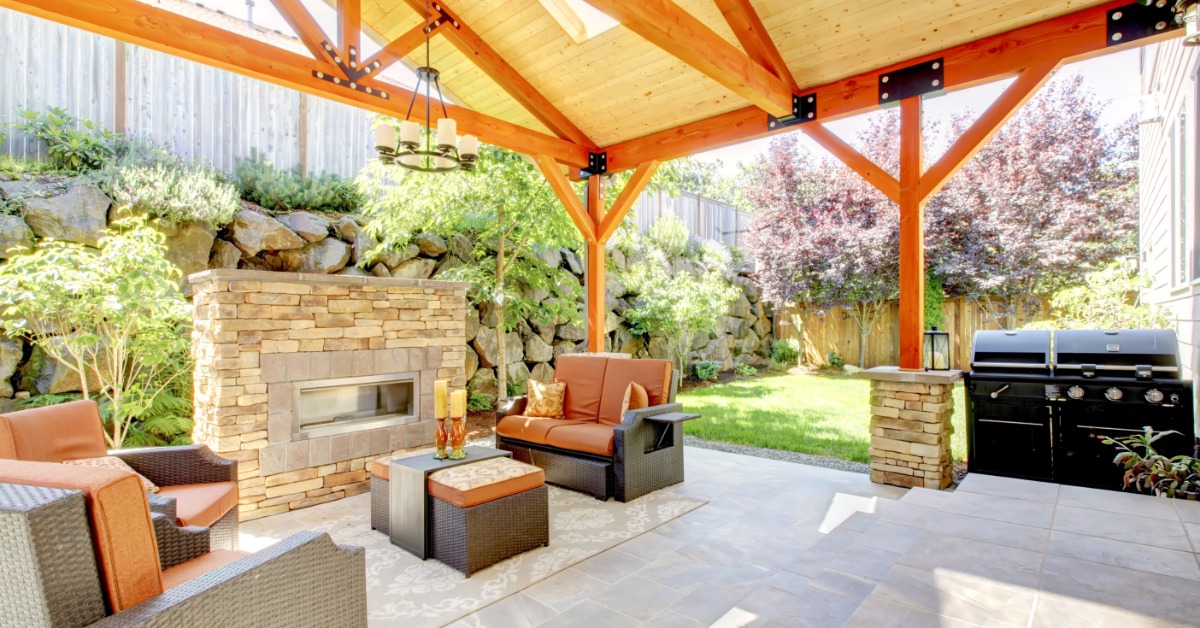
Patios stay close to the ground, giving them a more settled, connected feel. A patio can blend into the lawn, garden beds, walkways, and other landscape features. If you want your outdoor space to feel like part of the yard, a patio may suit your style better.
Compare the Look
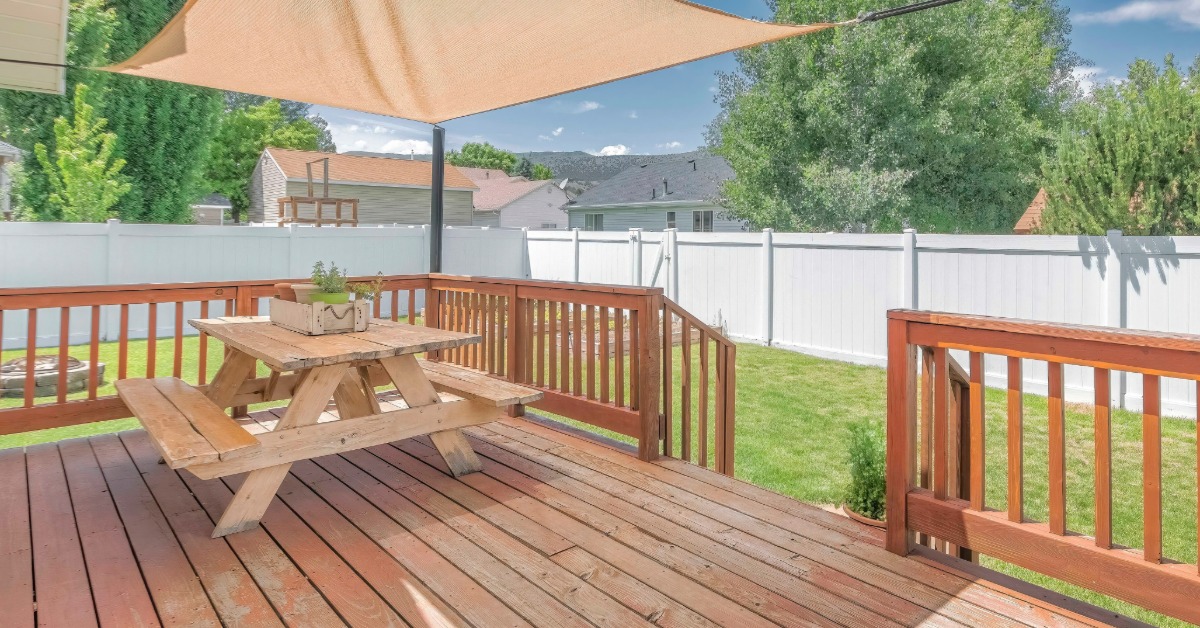
Decks often add warmth and structure to a home. Wood decks feel classic and natural, while composite decks offer a clean look with less routine maintenance. Railings, stairs, built-in benches, and lighting can shape the final design.
A deck can also serve as a clear visual extension of the home. Because many designs attach decks to the house, the material and color choices need to complement the siding, trim, roofline, and windows.
Patios offer a different kind of design flexibility. Pavers, flagstone, brick, stamped concrete, and natural stone can create a wide range of styles. A patio can feel rustic, polished, modern, or traditional, depending on the material and pattern.
Patios also work well with landscaping. You can frame a patio with plants, trees, mulch beds, seating walls, lighting, and walkways. That connection can help the whole yard feel planned rather than pieced together.
Consider Daily Use
Your outdoor habits should guide your choice. If you want quick access from the kitchen to a grill or dining table, a deck may work well, especially if the main living area is above ground level.
If you want a space for a fire pit, lounge chairs, container gardens, or a built-in seating area, a patio may offer more flexibility. Patios sit on stable ground, so they can often support heavier features with the right base and installation.
Families with kids or pets may also consider how each space connects to the yard. A patio can make moving between the house, grass, and garden feel simple. A deck may need stairs, gates, and railings, especially when the structure sits higher off the ground.
Look at Maintenance
Every outdoor space needs care, but decks and patios require different kinds of attention. Wood decks need cleaning, staining, and sealing to protect against moisture, sun, and wear. Without regular care, boards can fade, crack, splinter, or rot.
Composite decking reduces some of that upkeep. It still needs cleaning, but it doesn’t require staining like wood. Many homeowners choose composite decking when they want the look of a deck without as much maintenance.
Patios need care, too. Pavers can shift over time if the base settles. Weeds may grow between joints. Concrete can crack when the ground moves or when drainage problems develop.
Factor in Drainage
Drainage can make or break an outdoor project. Decks allow water to drain through the gaps between boards, reducing standing water on the surface. However, the area beneath a deck still needs attention. Poor drainage beneath the structure can cause muddy spots, erosion, pests, or moisture problems near the home.
Patios require careful grading because water runs across the surface. A patio should direct water away from the house and toward a proper drainage area. If water pools on the surface or moves toward the foundation, the patio can cause bigger problems.
This step deserves careful attention during planning. Proper drainage protects the investment and helps the space remain comfortable after rain.
Review the Budget
Costs can vary widely for both decks and patios. Size, material, site conditions, design details, and labor all affect the final price.
A simple ground-level patio may cost less than a raised deck, especially when the yard requires minimal grading. Poured concrete often costs less than natural stone, while premium pavers or custom patterns can increase the price.
Deck pricing depends on height, framing, stairs, railings, materials, and design complexity. Wood may cost less upfront than composite, but composite may save money on long-term maintenance.
The lowest upfront price doesn’t always bring the best value. A cheaper project can cost more later if poor drainage, weak materials, or rushed installation lead to repairs. A good outdoor space should fit your budget today and hold up over time.
Think About Privacy
Decks can sit higher than fences, shrubs, or nearby landscaping. That height can open the view, but it can also make the space feel more exposed. If neighbors sit close by, you may want privacy screens, pergolas, tall planters, or strategic plantings.
Patios can feel more private because they sit at ground level. Fences, hedges, trees, and garden beds can screen the area more easily. A patio tucked into the landscape can feel quiet and relaxed, even in a busy neighborhood.
Privacy matters most when you plan to use the space often. If you want to eat outside, read, work, or relax without feeling watched, make privacy part of the design from the start.
Plan for Entertaining
Both decks and patios can support great gatherings. A deck can work well for smaller groups, outdoor meals, and casual evenings near the house. It can feel like an outdoor room connected to the main living space.
A patio can create more room for zones. You can set up one area for dining, another for a fire pit, and another for conversation. Larger patios can also connect to walkways, pools, gardens, or outdoor kitchens.
Think through how people will move through the space. Guests need clear paths from the house to seating, food, drinks, and the yard. A thoughtful layout makes the area feel comfortable instead of crowded.
Match the Home
Your home’s style should guide the final choice. A deck may fit a home with a raised entry, wooded backyard, or elevated view. It can add dimension and make the back of the house feel more usable.
A patio may fit a home with a broad backyard, garden beds, or a walkout basement. It can ground the landscape and create a smooth transition into the yard.
Some properties work best with both. A deck can step down to a patio, or a patio can sit below a small landing. Combining the two can give you height, access, and ground-level gathering space.
Make the Right Choice
A deck works best when your home needs elevation, your yard slopes, or you want a raised space connected to the main floor. A patio works best when you want a ground-level retreat that blends into the landscape.
Neither option wins for every home. The best choice between a deck and patio depends on how you live, how your yard functions, and how much maintenance you want to take on. Look at the space honestly before you commit.
A well-planned outdoor area should feel natural, useful, and inviting. When the design fits your property, you’ll use the space more often and enjoy your yard in a whole new way.